I've been trying to figure out who I would talk to if I was a vet in Milwaukee looking for the public health department to report a zoonotic disease to.
Enter the internet:
City of Milwaukee's Public Health Links
This is broken down into sections:
1. government agencies, both state and federal
2. water - beaches, great lakes, EPA, hygiene
3. academic, including Marquette, UW Milwaukee, but also EINet (emerging infectious network)
4. resources - mostly CDC and Medscape's news-like service
5. biohazard and interesting randomness - more CDC sites, but also parasites, fungus, and aspergillus
Does this actually answer my question?
Um, no.
Now, there is the Milwaukee Public Health Laboratory. Sounds promising.
Let's see, they list a bunch of items in their mission statement: food safety, emergency response, disease surveillance...all good things, all good things, but where's reportable zoonotic diseases go?
How about MADACC? (Milwaukee Area Domestic Animal Control Commission, aka the humane society)
A little better -- hey, at least there's a list of how many pets you can have in a household.
Still not quite what I'm looking for, though.
Maybe I'm too focused. Probably just the state vet would do, right?
I'll do a search for "veterinary", there we go...
Hey, look, actual rabies guidelines! That's handy...okay, now what about other zoonotic diseases?
And, at long last, I find the reportable diseases page.
It splits them up between categories I, II, and III. Interestingly, the vast majority of Category II are zoonotic (not a surprise). Some of them I suspect are diagnosed not infrequently by veterinarians in animal patients; I do not know how often vets actually report these cases. For that matter, although I would think the state would be interested in the presence of these diseases in animals, I don't know that they do-- anyone remember hearing "Report your blasto cases here!" at the last WVMA convention?
Wednesday, May 6, 2015

Wednesday, November 12, 2014
Challenges of professionals blogging
I have not written any posts for this blog for over a year, not because interesting and educational and exciting things have failed to happen (interesting&educational&exciting is the working definition of an internship and of starting a new job, right?). But rather because I haven't found a good way to relay those interesting etc. etc. things in a way that doesn't leave me wondering if I am going to miss some detail that leaves me open to a legal issue.
I am not invested enough in sharing the day-to-day escapades of being a practicing veterinarian, or for that matter a public health student, to look into the exact legal standards for sharing stories about clients. I have seen discouragement dished out on VIN which targets new veterinarians who fail to write to the exacting standards of (non-blogging) grown-ups, and which in rather the same way as a homeowner's association eyeing your untidy front yard, says "This reflects poorly on all of us. Conform!" (Vin has a certain passive aggressive streak, and if perchance this comes to its attention, I am sure will lambast me for my unprofessional, uneducated mutterings. I am making no particular effort to pare this down to a concise and readable message, so perhaps I deserve it).
At any rate, figuring out the balance on how to relay interesting stories and information with appropriate sourcing and courteous obliteration of identifying markers makes for a lot of anxiety. This pretty much wrecks the writing experience, and removes some of the benefits of "practice" writing, so I am planning to officially discontinue this blog.
I am not invested enough in sharing the day-to-day escapades of being a practicing veterinarian, or for that matter a public health student, to look into the exact legal standards for sharing stories about clients. I have seen discouragement dished out on VIN which targets new veterinarians who fail to write to the exacting standards of (non-blogging) grown-ups, and which in rather the same way as a homeowner's association eyeing your untidy front yard, says "This reflects poorly on all of us. Conform!" (Vin has a certain passive aggressive streak, and if perchance this comes to its attention, I am sure will lambast me for my unprofessional, uneducated mutterings. I am making no particular effort to pare this down to a concise and readable message, so perhaps I deserve it).
At any rate, figuring out the balance on how to relay interesting stories and information with appropriate sourcing and courteous obliteration of identifying markers makes for a lot of anxiety. This pretty much wrecks the writing experience, and removes some of the benefits of "practice" writing, so I am planning to officially discontinue this blog.
Friday, July 19, 2013
The cost of knowledge for your sick pet
Coming into the internship from a public health angle has been
interesting. There's a lot of frustration among the veterinarians about
clients who don't understand the costs associated with care, or who are
trying really hard to learn about medicine but getting it wrong.
For people on a strict budget, taking an animal to the vet is a luxury. I suppose there are some ethical issues about whether you should have a pet if you can't afford to take care of it, but many of these people take terrific care of their animals, they're just not equipped to handle the sorts of health problems that require multiple tests and hospitalization. I am not going to blame anyone for not knowing how much it costs to go to the vet.
In just one month I've seen a lot of shocked faces when we tell owners that the basic work-up for their animal is going to be 500-1000 dollars.
For people on a strict budget, taking an animal to the vet is a luxury. I suppose there are some ethical issues about whether you should have a pet if you can't afford to take care of it, but many of these people take terrific care of their animals, they're just not equipped to handle the sorts of health problems that require multiple tests and hospitalization. I am not going to blame anyone for not knowing how much it costs to go to the vet.
In just one month I've seen a lot of shocked faces when we tell owners that the basic work-up for their animal is going to be 500-1000 dollars.
- Internal medicine is always expensive. Finding answers is expensive, and by expensive I mean $1,000 and up.
- Pancreatitis is expensive and super frustrating to treat, since it can last for weeks. Hospitalization tends to be $400 a day, for all the meds and monitoring that we do.
- For a dog that has to be on fluids for a week or more, that quickly turns into a $3,000 bill. Even the affluent owners start to squirm at that point.
- There are some wonderful drugs out there to reduce nausea. They cost a lot. I assume people have successfully treated pancreatitis without these wonderful drugs. However, many clients are hospitalizing their pets because they want Fluffy to feel better, not just eventually get better. And one of the fastest ways to get Fluffy better is to make her feel better, so the circular logic says it's worth the investment.
- Feeding! I love the fact that medicine has started to come around to say that feeding dogs with pancreatitis probably actually helps. I am a huge proponent of starting enteral nutrition as soon as possible, which given my relative inexperience and lack of commitment to a specific line of treatment on almost every disease process in the world, demonstrates either huge personal bias or the power of selective attention to rapidly develop understanding of a disease process. I saw a lot of pancreatitis dogs last month.
- Big dogs are more expensive. They need more fluids, they need more drugs, and they can be much harder to manage at home.
- Imaging in a perfect world is radiographs AND ultrasound. We try to look at everything with ultrasound, but it's like making a map on foot vs. doing a fly-over and getting a snapshot of everything. I don't know what the average cost of ultrasound it; here it is $300, while radiographs (two views are so much more helpful than one) are $125.
- Kitty replacement value. Animal Control routes a fair number of strays through the clinic. These are cats who get maybe an x-ray or some bloodwork and that's their $100 cap. There are some perfectly healthy strays we never see. Yet each one is a potential crash'n'burn. And in the meantime, we have cats who are total wrecks, who have already done a crash'n'burn, and their owners are investing multiple grand to keep them going. It is a weird mindframe, to go back and forth between minimal and absolute max investment. It is all based on human-animal bond, so one of my other burgeoning opinions is that owners visiting is to be encouraged. Because especially with cats, the replacement value of a cat is completely determined by the bond with the owner.
Wednesday, May 15, 2013
Are DVMs paid less 'cause we're girls?
This is gonna be long.*
I've been wondering how much veterinary medicine's current problems--with salaries underperforming student debt, that is--are linked to the huge shift in who is going to school, i.e. classes made up of 80% women. Considering that our society hasn't got its mind wrapped around paying an equal wage to women, that might actually be part of the problem.
My two main sources for facts on this TATUAH (Today's Analytic Topic Unrelated to Actual Homework):
Gender and Veterinary Medicine
Plus this one on why men aren't applying to vet school: Feminization in Veterinary Education
Looking at veterinary medicine, there are problems. Low income makes high expense of school a major problem down the road.
1. Women accept lower pay.
How much of a role does gender discrimination play? How much of a role does gender actually play? It seems like women accept lower salary, which is a problem. They are less driven by financial considerations than career satisfaction based on relationships. I've read a lot of anecdotal references to the fact that women approach work differently than men, but haven't found a legit study to pin it to yet. But I remember financial advice from vet school about not underselling yourself when negotiating a salary. And I remember reading that a living wage for a man tends to assume that he may be supporting a wife and kids, while a living wage for a woman...well, it doesn't assume she's supporting a husband and kids.
Are women less likely to become perfectionist surgeons? Well, I would guess that in general, yes, women are a little better at life balance--and so even when they are doing the same amount of work, it looks a little more relaxed. And they may not push themselves quite so hard at work because they are pushing themselves hard on ALL fronts.
How does this play into professional salaries? Subtly, I would guess.
2. Women are less likely to aim for practice ownership.
Conversely, men may be discarding the profession because they see decreased opportunities for practice ownership. It is difficult to approach this topic without it starting to sound like a blame game, you know "you women are ruining the profession with your lack of incentive" vs. "well, you men are dropping it because all you care about is money."
But if women don't own the practices, then they are not in charge of paychecks for the other veterinarians there.
I was discussing this all with a friend, who wanted to know if men are just more willing to work crazy hours and take lousy jobs that get them better pay down the line. Which is the point at which I want to go dig in the data and start making box-and-whiskers plots.
3. Women take time off for having kids.
This one sucks. Women are penalized in their careers for having kids, but society expects us to revere family and babies. And medicine is the sort of career that is physically and emotionally challenging as it is. Women do not receive any kickback, however, for being more understanding or more well-rounded (that is not supposed to be a pun). Instead, the system pokes them in the eye and says, "well, it's only fair that people who don't take maternity leave at their time of peak productivity get several pay grades higher salary." And then the system pokes them again and says, "But seriously, you are bringing down the professional average."
4. Veterinarians are not MDs
Which is just baffling. I wonder how much this has to do with gender. Doctors these days are both men and women, and as far as I can tell, it is relatively equitable. I think because the people who go into medical school are all recognized to be workaholic psychos. Because there's still relative gender balance, MDs have maintained an even spread. Also, medicine may be changing, but no one is blaming doctors for not wanting to work in rural areas where they might not get paid enough to cover their loans.
Vets, on the other hand. Vets are also workaholic psychos, but the shift to women takes the focus off that. Again, anecdotally (time for a coding exercise! And I don't mean with a defibrillator), I hear complaints that women just want to practice small animal medicine, settle into a cozy practice, and start in on maternity leave. It is true that fewer men are going into veterinary medicine in total. But this may be a case where men are more likely to go into veterinary medicine if they want to practice in large animal medicine, which is going to skew the numbers and make it look like women are eschewing large animal, when in fact that entire field is in significant decline.
5. Women just ain't men. Oh, and a few massive sociologic upheavals that just happen to be right now.
One point to keep in mind, women are outnumbering men in getting college degrees overall, and men who make it through the system without retreating to video games (will-to-power, topic for another day), tend to funnel into fields that provide enough prestige (money, title, or geek cred) to overcome that tendency. freak out when they see the classrooms full of females.
80% of the vet class is female. 4% of the females go into large animal medicine
20% of the vet class is male. 13% of the males go into large animal medicine.
Out of the class, over half of the students going into large animal medicine are female.
And large animal medicine tends to be in rural areas where people cannot pay enough to cover a young doctor's school loans. It may just be that large animal medicine is undergoing its own massive upheaval, namely, the shift to herd health and techs who are more than happy to take over ultrasound and DA surgery in return for a steady job.
6. Maybe it's a good thing?
If veterinarians did not learn the exact same medicine as MDs, this would not be as obnoxious. Vets have a couple of advantages. We can practice on our patients much earlier in the learning process, we have at least a modicum of financial education, and we can start practicing without an additional four years of low-paying residency.
I want to know if women are just less interested in prestige. They are okay with practicing and being good veterinarians, but they're not going to rock the boat over a few grand a year and greater recognition of their medical prowess. Because vet clinics tend to be small and privately owned (or small and franchised, like Banfield) they don't jockey for prestige like hospitals trying to be the biggest and best. Because insurance doesn't obscure the costs, because people don't (can't) put as much money into their animals, there's not the same quantity of money at stake.
In summary, women in veterinary medicine is most likely linked to the pay disparity between this medical profession and every other profession that requires 4 years of maniacal devotion to studying. It is probably multifactorial; women may not be coming into the profession with the financial underpinnings for running a business, which is still a part of veterinary medicine. Lingering gender discrimination hurts the bargaining power of women at the beginning of their careers. Our culture's expectation that professionals establish their careers through long hard hours straight out of school conflicts with societal pressure and biological prudence to have kids around the age of 30. Because there are disproportionately more women in veterinary medicine hitting that stage now, it draws attention to the gender imbalance, and decreases the likelihood of young men seeing themselves as potential veterinarians. Lastly, veterinary medicine has some strengths in terms of practicality that may make it more robust than it currently appears, provided that veterinarians--both men and women--are prepared to apply that practicality to the shifting environment of modern medicine and economics.
*I plan to rewrite this with real stats and examples and stuff, since it was written off the cuff.
Crummy bike thieves
So today my bike was stolen.
In addition to stealing my bike, they dropped my helmet on the road and drove over it. Honestly.
I was (still am) upset. This was my bike for fourteen years, I'd added a rack and fenders to it so I could ride in the rain to the clinic all through vet school. I'd locked my bike up on the rack outside my apartment, pretty typical, considering that I usually bike every day. However, the rear tire went flat overnight, and I was planning on taking it to the bike shop as soon as I was through the first half of finals. So I didn't take it down to the basement, where I normally move it if I'm not riding for a couple of days. Besides, while I love my bike very much, it's not shiny or even new; I think Schwinn stopped making it in 1990. The paint has been scraped off in multiple places. The gears are a bit gap-toothed. Nonetheless, when I came home today, the cable was cut, my bike was gone and my helmet was shattered in the middle of the parking lot. It's an unpleasant wake up call, not just that people steal, but that people steal with bolt-cutters. (yes, I'm sheltered)
I feel like I let the bike down. This is anthropomorphizing a utilitarian mode of transportation, of course, not to mention the fact that it was some thief who chose to cut the cable and make off with my bike. There is a question on the police report asking, "Did you give permission for the theft of your property?" No no nope no no.
In retrospect, I should have done things. I will do them with my next bike. I make a list of them here:
Model:
Year:
Color:
Serial Number:
Special Features/ Components:
Comments:
In short, my bike wasn't a target for theft until someone stole it and drove off, at which time it was too late to get paperwork in order or to move it inside. I am kicking myself for not moving it inside.
In addition to stealing my bike, they dropped my helmet on the road and drove over it. Honestly.
I was (still am) upset. This was my bike for fourteen years, I'd added a rack and fenders to it so I could ride in the rain to the clinic all through vet school. I'd locked my bike up on the rack outside my apartment, pretty typical, considering that I usually bike every day. However, the rear tire went flat overnight, and I was planning on taking it to the bike shop as soon as I was through the first half of finals. So I didn't take it down to the basement, where I normally move it if I'm not riding for a couple of days. Besides, while I love my bike very much, it's not shiny or even new; I think Schwinn stopped making it in 1990. The paint has been scraped off in multiple places. The gears are a bit gap-toothed. Nonetheless, when I came home today, the cable was cut, my bike was gone and my helmet was shattered in the middle of the parking lot. It's an unpleasant wake up call, not just that people steal, but that people steal with bolt-cutters. (yes, I'm sheltered)
I feel like I let the bike down. This is anthropomorphizing a utilitarian mode of transportation, of course, not to mention the fact that it was some thief who chose to cut the cable and make off with my bike. There is a question on the police report asking, "Did you give permission for the theft of your property?" No no nope no no.
In retrospect, I should have done things. I will do them with my next bike. I make a list of them here:
- Locking inside overnight. Kryptonite locks can be picked, not as easily as cables cut, but breaking into an apartment complex is another level of theft.
- High visibility, multiple locks, make the bike unattractive, yada yada yada. My bike was non-descript, but it only had a cable and it was tucked away at the end of a quiet cul-de-sac.
- Evidently barely being able to squeeze the lock through both bike and anchor is good, as it makes it harder to use leverage to break the lock.
- Documentation
- I hear the VIN (BIN?) is under the pedal base. This would explain why I had so much trouble finding it the last time I looked (the internet has come a long way since I was in high school).
- Photographs. Astoundingly, I don't think I have any pictures of my bike, despite bike riding and photography both having been fairly major parts of my life.
- Receipts: I should, theoretically, have the receipt from its last tune-up, but I hadn't planned on my bike being stolen, especially not when it was sporting a flat tire. And it's been a trouble-free 14 years, so receipts are few and far between.
- Insurance
- This is complicated. Basically, you can get renter's insurance to cover your bike. But if you use it, your premiums go up. If your bike is stolen, you file a claim and get paid, and the bicycle is then recovered, you have to pay the insurance company to get it back.
- Given the dismal recovery rates for stolen bikes, it's probably worth it.
- Registration: Minimally helpful, apparently, as this usually means pieces of paper floating in one small region, and bikes are so very transportable, but it tends to be cheap and it may help a little. And what else are you going to do?
- http://www.nationalbikeregistry.com/ According to forum boards, the closest thing to a useful registration system.
Model:
Year:
Color:
Serial Number:
Special Features/ Components:
Comments:
In short, my bike wasn't a target for theft until someone stole it and drove off, at which time it was too late to get paperwork in order or to move it inside. I am kicking myself for not moving it inside.
Friday, April 19, 2013
The best vet school application essay
Courtesy of some smart folks at the student doctor forums.
http://forums.studentdoctor.net/archive/index.php/t-529897.html
"When I was five, I treated a wild squirrel's broken leg with creative use of grape popsicle sticks and barbie clothes; I also cured his rabies. Then when I was ten I raised a litter of bear cubs; they still live in my backyard and their names are Larry, Moe, and Curly. Of course, I realised that strictly animal experience was not enough and, at the age of 15, I started volunteering at an emergency clinic, while working full time at a mixed animal practice and doing relief work with zoo vets on weekends. As each animal was cured, I sobbed profusely with an abundance of soaring joy."
And so on.
http://forums.studentdoctor.net/archive/index.php/t-529897.html
"When I was five, I treated a wild squirrel's broken leg with creative use of grape popsicle sticks and barbie clothes; I also cured his rabies. Then when I was ten I raised a litter of bear cubs; they still live in my backyard and their names are Larry, Moe, and Curly. Of course, I realised that strictly animal experience was not enough and, at the age of 15, I started volunteering at an emergency clinic, while working full time at a mixed animal practice and doing relief work with zoo vets on weekends. As each animal was cured, I sobbed profusely with an abundance of soaring joy."
And so on.
complaints about grad school
Extra frustration today, as all the projects come due. These are realistic problems, by the way. Defining the problem can show the path to the solution...or so they say...at any rate, things that trip me up, and "working harder" is an ambiguous, unhelpful solution.
1. When I sit down to read (articles and schoolwork, that is) I get so bogged down in details and trying to think carefully about each bit that I don't even finish the one article.
Or, I get scroll through the endless pages and start panicking and can't concentrate at all.
2. There is always an assignment due, which means I'm always working on an assignment at last minute, which means it's always too late to ask for help.
3. There's that one class that I don't learn anything useful in and that has waaay too much homework. It is responsible for 50% of #2.
4. Most of what I'm learning is either too in-depth and I'm lost. Or it's too superficial and it's not gonna sink into my head at all.
5. Talking takes too long. And requires that I actually remember something, instead of reading from my notes.
6. Taking notes is hard. There's too much detail to capture and you just know you aren't going to be looking at them again. Like, ever.
7. They don't let you ask for refunds on classes like #3.
1. When I sit down to read (articles and schoolwork, that is) I get so bogged down in details and trying to think carefully about each bit that I don't even finish the one article.
Or, I get scroll through the endless pages and start panicking and can't concentrate at all.
2. There is always an assignment due, which means I'm always working on an assignment at last minute, which means it's always too late to ask for help.
3. There's that one class that I don't learn anything useful in and that has waaay too much homework. It is responsible for 50% of #2.
4. Most of what I'm learning is either too in-depth and I'm lost. Or it's too superficial and it's not gonna sink into my head at all.
5. Talking takes too long. And requires that I actually remember something, instead of reading from my notes.
6. Taking notes is hard. There's too much detail to capture and you just know you aren't going to be looking at them again. Like, ever.
7. They don't let you ask for refunds on classes like #3.
Saturday, January 19, 2013
Noisy Coyotes, hungry opossums
My dogs insist on barking at the coyotes, which makes sense as the coyotes insist on wandering across the lawn in the middle of the night. It makes for a difficult conundrum, though, in which I get to lie in bed wondering at which point I should go outside to make sure everything is okay and it's just a vocal debate between two cousins of the canine world. Fortunately there has been no yelping, which would imply escalation and the possible involvement of teeth.
The cats deal very differently with their interloper, who is a fat opossum that has discovered the open buffet that is the cat food dishes. The cats sit in their warm little beds on the countertop--this is out in a shed with a spare room we call the pussycat lounge--and glare at the opossum. As far as I can tell no actual agitation occurs. The cats would be glaring at each other if there wasn't an opossum, so the total effect seems to be nil. The only problem is that unlike the cats, the opossum is not litter trained, so on the whole we prefer he doesn't visit and close the door most of the time.
Open buffet cat food dishes deserve a little explanation. House cats generally overeat when they have 24/7 access to food, if only because they are bored. But it's the same as having, say, an open box of honey nut cheerios open on the counter in the kitchen. You might not be bored, exactly, but your stomach forgets that you ate a cup of cheerios only an hour before, and they are so tasty that it's hard not to gravitate toward them. And they crunch!
Overeating cats leads to fat cats, of course, and fat cats are prone to diabetes and kidney failure. All cats are prone to kidney failure as they get older, but extra fat doesn't help.
But my cats have 24/7 access to food. What gives? This could be bad, for goodness sakes. However, these are outdoor cats. They like the taste of freshly killed mice--and cardinals--and dry food is something you eat every couple of days when you have temporarily exhausted the supply of mice that run into your paws (we have somewhat lazy cats. In their defense, we also have a ton of mice with mediocre survival instincts). They also are outside in the cold all the time, except for when they finagle a seat in the kitchen, which is every day when it's cold out.
Also, in an effort to get them into shape for winter, they get a can of cat food to share every day. They like this even better than cardinals, and so they hardly eat any of their dry food at all. The opossum is quite happy, though I'm sure he wishes he was in on the canned food too.
The cats deal very differently with their interloper, who is a fat opossum that has discovered the open buffet that is the cat food dishes. The cats sit in their warm little beds on the countertop--this is out in a shed with a spare room we call the pussycat lounge--and glare at the opossum. As far as I can tell no actual agitation occurs. The cats would be glaring at each other if there wasn't an opossum, so the total effect seems to be nil. The only problem is that unlike the cats, the opossum is not litter trained, so on the whole we prefer he doesn't visit and close the door most of the time.
Open buffet cat food dishes deserve a little explanation. House cats generally overeat when they have 24/7 access to food, if only because they are bored. But it's the same as having, say, an open box of honey nut cheerios open on the counter in the kitchen. You might not be bored, exactly, but your stomach forgets that you ate a cup of cheerios only an hour before, and they are so tasty that it's hard not to gravitate toward them. And they crunch!
Overeating cats leads to fat cats, of course, and fat cats are prone to diabetes and kidney failure. All cats are prone to kidney failure as they get older, but extra fat doesn't help.
But my cats have 24/7 access to food. What gives? This could be bad, for goodness sakes. However, these are outdoor cats. They like the taste of freshly killed mice--and cardinals--and dry food is something you eat every couple of days when you have temporarily exhausted the supply of mice that run into your paws (we have somewhat lazy cats. In their defense, we also have a ton of mice with mediocre survival instincts). They also are outside in the cold all the time, except for when they finagle a seat in the kitchen, which is every day when it's cold out.
Also, in an effort to get them into shape for winter, they get a can of cat food to share every day. They like this even better than cardinals, and so they hardly eat any of their dry food at all. The opossum is quite happy, though I'm sure he wishes he was in on the canned food too.
Friday, January 11, 2013
Winterim + Minor Pursuits
My productivity appears to go through the floor when I do not have classes or other time-absorbing events scheduled for the day. Depending on how we define productivity, of course. Today I got all the pants that needed to be shorter hemmed up, learned to stitch a hand-rolled handkerchief, and now may be going to go get a needed haircut and if I am really on top of things, will go for a walk. I am simply drowning in excitement.
On the other hand, yesterday I was struck with a relapse of whatever nasty cold has been making the rounds. I thought I had outmaneuvered it last night by going to bed last night at eight, after a thoroughly nutritious dinner (there were vegetables! And seafood!), but then I woke up at midnight. Therein followed four hours of more or less abject misery, until my deranged sleep schedule felt satisfied with the havoc it had wreaked on my plans for the next morning. I did get my ranking for the match finalized. Unfortunately, that just meant I spent the remaining 3 hours in insomniac brooding. And congestion.
During the sewing today, I listened to "The Checklist Manifesto", Atul Gawande's book on how to manage complicated (i.e. made up of many simple tasks) processes in fields as divergent as construction, high-end restaurants, and, of course, surgery. It is excellent, as Gawande generally is, although for me it builds up contradictory inspiration to work in public health or to work hard in medicine...
I begin to think there's not a good way to work in public health until you have managed to excel in something else.
Taking a year from veterinary medicine to "do public health" sounds great, but in reality I am mostly sitting in classes and finding out about whole new fields I can simply not learn enough about in a year to be useful to myself or others (biostats...). On the other hand, I have spent a lot of time among people who, morose or excited, are still in school, which does color one's perception of life in such a way as to feel time is running out to become anything other than a perpetual student. But that sounds too much like insomniac brooding. Time for a walk!
On the other hand, yesterday I was struck with a relapse of whatever nasty cold has been making the rounds. I thought I had outmaneuvered it last night by going to bed last night at eight, after a thoroughly nutritious dinner (there were vegetables! And seafood!), but then I woke up at midnight. Therein followed four hours of more or less abject misery, until my deranged sleep schedule felt satisfied with the havoc it had wreaked on my plans for the next morning. I did get my ranking for the match finalized. Unfortunately, that just meant I spent the remaining 3 hours in insomniac brooding. And congestion.
During the sewing today, I listened to "The Checklist Manifesto", Atul Gawande's book on how to manage complicated (i.e. made up of many simple tasks) processes in fields as divergent as construction, high-end restaurants, and, of course, surgery. It is excellent, as Gawande generally is, although for me it builds up contradictory inspiration to work in public health or to work hard in medicine...
I begin to think there's not a good way to work in public health until you have managed to excel in something else.
Taking a year from veterinary medicine to "do public health" sounds great, but in reality I am mostly sitting in classes and finding out about whole new fields I can simply not learn enough about in a year to be useful to myself or others (biostats...). On the other hand, I have spent a lot of time among people who, morose or excited, are still in school, which does color one's perception of life in such a way as to feel time is running out to become anything other than a perpetual student. But that sounds too much like insomniac brooding. Time for a walk!
Sunday, January 6, 2013
Le Birdies at Le Feeder
The birds are enjoying their feeder this morning. The snow has a scattering of seed (the birds are messy eaters and toss away the scraps) that gets more condensed every day. It's a grey day out, with the woods off in the distance a misty shading of blue but everything else is black or grey or white.
So far I have seen a cardinal, a tufted titmouse, lots of sparrows, lots of juncos, and at least one woodpecker. I think I may have seen a second one that was not nearly as showy, but I got distracted by the titmouse before I identified it. There's also a little sparrow looking bird--merp, it just flew off--that I think must be something else, because it has a tawny gold hue and only a couple of bars on the wings.
And now they are all gone. The chickadees start returning first, and...hah! I knew there was another woodpecker. This one is grey with a red cap, the other was a flashy black and white*.
I've heard a rumor that we are palpating cows later today, which is as far from watching birds as you can get, but for now it is nice to sit with tea and look out the window.
*Methinks I need a bird book.
So far I have seen a cardinal, a tufted titmouse, lots of sparrows, lots of juncos, and at least one woodpecker. I think I may have seen a second one that was not nearly as showy, but I got distracted by the titmouse before I identified it. There's also a little sparrow looking bird--merp, it just flew off--that I think must be something else, because it has a tawny gold hue and only a couple of bars on the wings.
And now they are all gone. The chickadees start returning first, and...hah! I knew there was another woodpecker. This one is grey with a red cap, the other was a flashy black and white*.
I've heard a rumor that we are palpating cows later today, which is as far from watching birds as you can get, but for now it is nice to sit with tea and look out the window.
*Methinks I need a bird book.
Monday, December 17, 2012
Birding Christmas Blog Alert
My favorite blogger who is both artist, writer, and avid gardener (it's a good combination) is also responsible for my interest in birding.
To be fair, part of the blame should also go to the professor at vet school who routinely shepherds a covey of students out to the lake and back to introduce us to the joys of spotting a bufflehead a quarter mile away. I am not sure I could recognize a bufflehead up close, but that characteristic speck of white that is almost as big as the speck of black is unmistakeable!
Anyway, the blogger is doing the twelve days of Christmas with illustration and commentary.
The link to Day 3 is here: Three Moorhens (at Ursula's blog)
"...Our American form of this species is not endangered, not threatened, and not apparently in decline. There is a Hawaiian subspecies that’s probably in trouble, by virtue of being a native bird in Hawaii..."
It's as good a crash course as any in Elementary Birding for the North American Continent.
And on that note, if you are a birder, consider participating in the Christmas Bird Count. It is the longest-standing science project for citizen scientists (113 years and counting), and one of the cooler ways to "do science" without being an official scientist. Literally cooler, at this latitude. It helps track bird populations and habitat trends. Bonus point: As a poster-child for citizen science, it has helped persuade academics and researchers--to some degree--that normal people can contribute meaningful information to science, without having a PhD.*
*An actual scientist told me this.
 |
| Bufflehead up close: I hardly knew ya |
Anyway, the blogger is doing the twelve days of Christmas with illustration and commentary.
 |
| Coot: Not A Moorhen |
 |
| Moorhen: Not A Coot |
 |
| Hawaiian Moorhen: Yes Endangered |
It's as good a crash course as any in Elementary Birding for the North American Continent.
And on that note, if you are a birder, consider participating in the Christmas Bird Count. It is the longest-standing science project for citizen scientists (113 years and counting), and one of the cooler ways to "do science" without being an official scientist. Literally cooler, at this latitude. It helps track bird populations and habitat trends. Bonus point: As a poster-child for citizen science, it has helped persuade academics and researchers--to some degree--that normal people can contribute meaningful information to science, without having a PhD.*
*An actual scientist told me this.
Saturday, December 15, 2012
test
Testing link to a recording of piano music (Jessica's theme, from the movie The Man From Snowy River).
Studies in digestion
I beautifully procrastinated on my biostats homework yesterday by learning about the Rule of 20. This is the mnemonic for all the many many thingies* to check on patients in critical care. My favorite by far is nutrition, because it is so important and yet easy to overlook. It requires thinking of the digestive tract as a true ecosystem all of its own. Vet school was the first place I had come across this notion, in such a way that it made sense** and it recasts the world when you start thinking of your intestines as something not unlike Pike Place Market. Fewer fish flying through the air, y'know, but otherwise, just like. It's not just the easily angered proletarian masses of bacteria, either. There's the constantly sloughing, constantly regrowing cells that balance the tract and absorb nutrients and respond to the environment. If they don't get fed, they are subject to atrophy, microscopic ennui robbing them of purpose.
So feeding the patients is important and feeding the patients in a normal way, i.e. the food goes into their stomach, then moves on to their intestines in due course. The odd nasogastric tube or surgically placed stomach tube takes nothing away from this process, but parenteral nutrition (enteral being the normal way), in which we inject a nice amino acid slurry through the IV catheter, misses the point of keeping ALL the patient's systems healthy. It is sometimes necessary, but it means that the instant that patient can hold down anything--usually the most pureed chicken-flavored baby food that money can buy--someone gets to start feeding him globs of it on a tongue depressor.
But today is back to biostats. I am indulging in a good breakfast, a la the importance of digestion, inspired by my conversation with myself:
--"I want french toast."
--"We always have french toast."
--"What spices can I use that I haven't put in french toast before?"
--"Um...we've used cinnamon, nutmeg, allspice, ginger, thyme, basil, pepper, cloves, and rosemary..."
--"Oo, I found rose extract!"
--"..."
--"Surely that would work?"
--"To the internets!"
And I found a lovely rose-cardamom french toast recipe here.
*technical term
**Apparently for things to make sense I need to spend about twenty hours staring through a microscope at intestinal biopsies.
So feeding the patients is important and feeding the patients in a normal way, i.e. the food goes into their stomach, then moves on to their intestines in due course. The odd nasogastric tube or surgically placed stomach tube takes nothing away from this process, but parenteral nutrition (enteral being the normal way), in which we inject a nice amino acid slurry through the IV catheter, misses the point of keeping ALL the patient's systems healthy. It is sometimes necessary, but it means that the instant that patient can hold down anything--usually the most pureed chicken-flavored baby food that money can buy--someone gets to start feeding him globs of it on a tongue depressor.
But today is back to biostats. I am indulging in a good breakfast, a la the importance of digestion, inspired by my conversation with myself:
--"I want french toast."
--"We always have french toast."
--"What spices can I use that I haven't put in french toast before?"
--"Um...we've used cinnamon, nutmeg, allspice, ginger, thyme, basil, pepper, cloves, and rosemary..."
--"Oo, I found rose extract!"
--"..."
--"Surely that would work?"
--"To the internets!"
And I found a lovely rose-cardamom french toast recipe here.
*technical term
**Apparently for things to make sense I need to spend about twenty hours staring through a microscope at intestinal biopsies.
Tuesday, December 11, 2012
Social Trust, Spaghetti Junctions
Apropos of my class in risk communication, which is starting to wind down, I came across this article ( Atlanta Journal-Constitution article on Atlanta's Metro ) about Atlanta's problem getting their metro system fixed up.
 The gist of the story is that everyone in Atlanta knows the city's metro system needs to be updated in a major way, and astoundingly, everyone is willing to pay for it (more or less...about 2/3 said they would put money down). So far so good, right? Even the suburbanites have started asking when they're going to get rail, which goes to show how awful the commute has gotten.
But when the referendum to put $7.2 billion into roads and metro was up for voting this summer, it was turned down.
How?
Because the people of Atlanta, according to the poll described in the AJC story, don't trust their public officials not to screw it up.
The determinants of trust, for corporations and government agencies, are pretty basic.
Hopefully the poll will help them figure out what they have to do to prove they can responsibly handle billions of dollars. It might take a while. Especially with all the traffic.
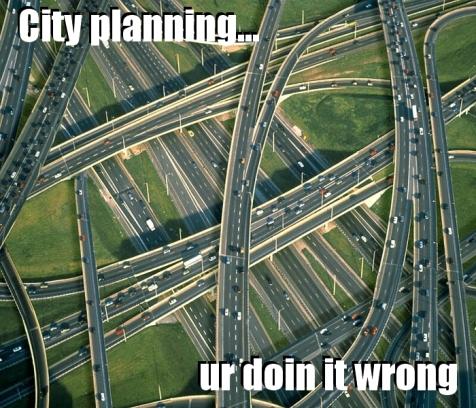
I like Atlanta, but I have to agree, its transportation system is a mess.

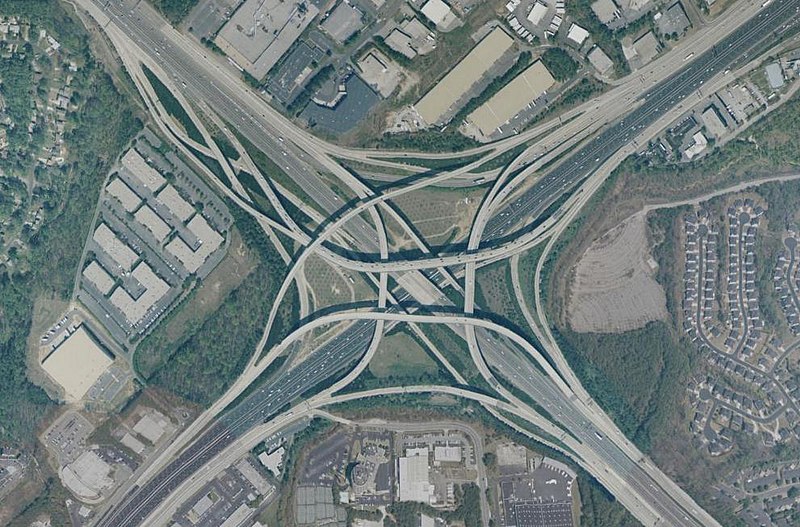
But when the referendum to put $7.2 billion into roads and metro was up for voting this summer, it was turned down.
How?
Because the people of Atlanta, according to the poll described in the AJC story, don't trust their public officials not to screw it up.
The determinants of trust, for corporations and government agencies, are pretty basic.
- 1. Competence, expertise
- Yep, that one's been screwed up by highway construction that didn't finish on time, by decisions to put trains in politically convenient locations, and general inability to fix the existing transport problems.
- 2. Commitment to the public good
- Also damaged, mostly by political scandals and corruption cases
- 3. Concern, care
- Political shenanigans don't help with this one either. Transparency can go a long way here, and probably got damaged during previous roadwork projects where toll roads popped up without warning, that sort of thing.
Hopefully the poll will help them figure out what they have to do to prove they can responsibly handle billions of dollars. It might take a while. Especially with all the traffic.
I like Atlanta, but I have to agree, its transportation system is a mess.
Friday, November 30, 2012
Grad School vs Vet School
As a veterinary student, it was a given that time was not only a valuable commodity, but it would be spent on SLEEP, the sooner the better. And maybe studying, and perhaps two hours a week could be diverted into the most basic of life maintenance, such as eating dinner with family members, significant other, or the one non-vet-school friend who still found your stories about animal anatomical oddities entertaining (it's important to hold onto friends like that).
Then there is grad school. Grad school does not cling quite so tenaciously to your life as vet school.
Vet school latches on the second day of orientation and for the next four years reminds you constantly that you are going to be a Doctor, with Responsibilities, to say nothing of Board Exams. Also you have two patients to write discharge instructions for and rounds starts in an hour and you haven't looked up ketoacidosis in small ruminants yet.
Also you need to do treatments, like, now.
Grad school, on the other hand, stretches luxuriously in the morning, looks at the clock, and says, "Eh, I don't have any classes or work on Wednesday, I'll sleep in a little and be better rested to work on my essays." (Obviously people who have jobs to juggle with classes are going to be in more of a vet school category of time management.)
Nor does grad school place the same emphasis on facts...facts are secondary to the bigger picture of synthesizing ideas, making connections, and revising your resume to a finely honed reflection of your finest career attributes.
The veterinary student side of me freaks out about this.
The grad student side goes, "I will think about things...hm, what should I make for dinner?" Once in a while the grad student side also goes, "Holy cow, I have a lot of homework to catch up on." However, there are always a few more hours in the day, we're mostly just skimming articles anyway, and it's important to take time...to synthesize.
And then you get to that point in the semester where all the essays come due, the one class that involves knowing facts has an exam and it occurs to you that with all the synthesis and all the leisurely discussions, you still don't know what your job would actually entail. And then grad school is just like vet school but with even less certainty of what you do when you graduate, except that you aren't done for the day when you leave the school because there's always more essays to write and readings to synthesize.
And it's a lot harder to write discharge instructions in AMA style.
Then there is grad school. Grad school does not cling quite so tenaciously to your life as vet school.
Vet school latches on the second day of orientation and for the next four years reminds you constantly that you are going to be a Doctor, with Responsibilities, to say nothing of Board Exams. Also you have two patients to write discharge instructions for and rounds starts in an hour and you haven't looked up ketoacidosis in small ruminants yet.
Also you need to do treatments, like, now.
Grad school, on the other hand, stretches luxuriously in the morning, looks at the clock, and says, "Eh, I don't have any classes or work on Wednesday, I'll sleep in a little and be better rested to work on my essays." (Obviously people who have jobs to juggle with classes are going to be in more of a vet school category of time management.)
Nor does grad school place the same emphasis on facts...facts are secondary to the bigger picture of synthesizing ideas, making connections, and revising your resume to a finely honed reflection of your finest career attributes.
The veterinary student side of me freaks out about this.
The grad student side goes, "I will think about things...hm, what should I make for dinner?" Once in a while the grad student side also goes, "Holy cow, I have a lot of homework to catch up on." However, there are always a few more hours in the day, we're mostly just skimming articles anyway, and it's important to take time...to synthesize.
And then you get to that point in the semester where all the essays come due, the one class that involves knowing facts has an exam and it occurs to you that with all the synthesis and all the leisurely discussions, you still don't know what your job would actually entail. And then grad school is just like vet school but with even less certainty of what you do when you graduate, except that you aren't done for the day when you leave the school because there's always more essays to write and readings to synthesize.
And it's a lot harder to write discharge instructions in AMA style.
Monday, November 19, 2012
The internship hunting process
I cannot help but reflect that, had I known six months ago that my back-up plan for public health was going to be getting some more clinical experience by way of an internship, I would have been a little more careful to talk to some interns in the many interesting places I was visiting. Everything was public health-themed, however, and there are enough alternate paths in that field alone to keep a student busy figuring out all the options.
EDIT: My unexpected favorite question to ask: What are you looking for in a candidate? I liked this question because it let me see what the clinic was looking for and whether that fit with what I can expect to offer as an intern. It sometimes sparked really long tangential conversations. It's only moderately awkward to ask, it helps to remember that you are interviewing them almost more than they are interviewing you.
I also would have contacted some of my clinicians from school earlier and made sure that they could recognize me from the crowd. And that they covered a range of specialties (tip: selection committees are made up of clinicians...and they expect to see clinician letters of recommendation. Epidemiologists, even epidemiologists with a medical degree, do not quite count).
There has been scrambling, added to the scrambling for school and mid-term essays, and the scrambling on the other end of the intern hunting process, which is going and looking at the clinics I'm applying to. I was disappointed in the internet's paucity of advice on this topic. Questions that occurred to me:
1. What do you wear if you are visiting a clinic for a day? Nice scrubs? A suit that can survive the odd encounter with a patient? I suspect most clinics don't intend to let unvetted (pardon the pun) intern applicants touch the animals, much less treat them. But...you never know. There are clinics that do, assuming that if you are put together enough to be visiting for internships, you must have reached a basic level of competence in fourth year.
EDIT: A suit. Everyone I saw was dressed as for an interview. I was dressed as for an interview and fit right in. Have a suit that you can stand to get pet-hair on because the chances are good you will end up restraining an enthusiastic golden retriever puppy for a student or a tech or a clinician.
EDIT: A suit. Everyone I saw was dressed as for an interview. I was dressed as for an interview and fit right in. Have a suit that you can stand to get pet-hair on because the chances are good you will end up restraining an enthusiastic golden retriever puppy for a student or a tech or a clinician.
2. How much time can you expect to spend? What is a good amount of time? On the one hand, I can see how tripping in, looking around, and tripping back out again isn't going to make a good impression. But how long do you stay if you've gotten a feel for the place and are on a tight schedule for the next visit? Do you plan on staying a whole shift? In some clinics that's a five hour day, if they're not busy. In others it is 14 hours and counting. And if it is the latter...at which point do you politely begin to edge to the door?
EDIT: Five hours seemed the average. You've started to get tapped out on the question front, the clinicians are still working and have asked you all the questions they're going to. If you have the whole day and are really excited about seeing some procedures go ahead and ask to borrow some scrubs, but otherwise say thank you and head out.
EDIT: Five hours seemed the average. You've started to get tapped out on the question front, the clinicians are still working and have asked you all the questions they're going to. If you have the whole day and are really excited about seeing some procedures go ahead and ask to borrow some scrubs, but otherwise say thank you and head out.
3. How exactly does one go about cornering the current interns to ask them if they are the happy sort of zombie-med-students or the unhappy sort? One clinic I was at had happy zombies, but with that special desperation of doctors who have one day a month to sleep.
EDIT: Around hours 3-4 the clinicians lose interest in you and you can shadow the interns. I got a much better sense of the intern culture at one clinic by stopping in at their closet-sized "lounge" while they were taking a Christmas-cookie break. The intern space says a lot too--this one was clearly used and kept up from year to year.
I'm sure more questions will occur presently, but I'm starting to feel a bit zombieish myself.
EDIT: Around hours 3-4 the clinicians lose interest in you and you can shadow the interns. I got a much better sense of the intern culture at one clinic by stopping in at their closet-sized "lounge" while they were taking a Christmas-cookie break. The intern space says a lot too--this one was clearly used and kept up from year to year.
I'm sure more questions will occur presently, but I'm starting to feel a bit zombieish myself.
EDIT: My unexpected favorite question to ask: What are you looking for in a candidate? I liked this question because it let me see what the clinic was looking for and whether that fit with what I can expect to offer as an intern. It sometimes sparked really long tangential conversations. It's only moderately awkward to ask, it helps to remember that you are interviewing them almost more than they are interviewing you.
Sunday, November 18, 2012
What to do if...
...you dump a quarter cup of cinnamon into a half a cup of applesauce?
I opened the wrong side of the shaker top.
Maybe mixing it into cookies?
I opened the wrong side of the shaker top.
Maybe mixing it into cookies?
Wednesday, November 7, 2012
Letters, explained in 7 steps
I sense I am entering a letter-writing phase.
This is brought on by newly acquired stamps (they've got pretty pictures!) and the most recent card from a friend in immaculate handwriting that, try as I may, I will never come close to replicating. Also, I haven't sent mail in weeks. I'm not very conscientious about it--if I got really desperate, I could always write to family, of all people--but I start getting twitchy when I realize I haven't used up any stationery in the last month (it means I'm not allowed to buy more. It's like yarn, that way--you know you're really not supposed to by another three skeins until you've finished that afghan, but they're so pretty...).
Of course, it's hard to write letters into a void. The occasional word of encouragement works wonders. One friend I write to on a semi-annual basis has a reply rate of once a year, so we're even. It just has to translate as, "Yes please keep writing me letters", and not, "oh by the way I got another letter from you and feel compelled to let you know, but you Really Should Not Bother." I don't think I've encountered the latter
In classic go-to preparation, I googled "letter writing" to see what comes up. And---gosh, how-to websites seem to have cornered the market on this. Their average article goes like this:
Step 1: Dear ____
Step 2*: How are you? How is the weather? How is the family? How is the potted plant? How is the planning of ultimate doom coming along? (pick 2-3)
Step 3: I'm fine. The weather is sleeting. The family is blooming. The potted plant is coping. It is proceeding as I have foreseen.
Step 4: An interesting thing happened to me today. [Insert interesting thing]**
Step 5: Oh golly would you look at the time?
Step 6: Please write. Or don't. I only put it in because ehow.com said I should.
Step 7: Find a more interesting link and follow away from the topic of letter writing. Your friends and family are safe for another week.
*Step 2 may be moved to follow step 4.
**When one of these letters is written by a medical professional, step 4 can get really weird--assuming you are able to wade through the acronyms. Having received one or two case studies-disguised-as-letters, I speak from experience.
Part II, (work in progress):
Not to knock the wikihows, I was hoping for something a little more substantive. Like examples of awesome letters written by famous writers. I found one reference to a book of Saul Bellow's letters. Aside from the enlightening influence of wikipedia, I have not idea who Saul Bellow was, except he evidently was a very highly esteemed writer who also wrote lots of letters, helpfully collected into a book. I read one of the excerpts. It was promising, entertaining and evocative, almost enough to convince me I should read one of his books before I read his letters.
Then I followed the wikipedia link to one of his books.
Oh, he's one of those writers.
I'm finding that the famous authors who receive all sorts of literary acclaim are less fun to read. I'm biased toward SciFi/Fantasy anyway, but I feel about famous works of literature the way I feel about most abstract art: vaguely annoyed that I have to read up on three hundred years of literary theory to know what the point was. Also, it seems to be a trope that if it wasn't deep enough, toss in disturbing treatment of children. Someday I maybe will get really into high literature and eat my words, but at the moment, I have seen this trend:
I like famous authors talking about the real world.
I do not like their books.
This so far has held true for Hemingway, Steinbeck, and Kurt Vonnegut, plus a few others who do not come to mind right now. Something about really good writers who then go and write groundbreaking treatises on the human condition fails to hold my attention, but I do love reading their missives.
This is brought on by newly acquired stamps (they've got pretty pictures!) and the most recent card from a friend in immaculate handwriting that, try as I may, I will never come close to replicating. Also, I haven't sent mail in weeks. I'm not very conscientious about it--if I got really desperate, I could always write to family, of all people--but I start getting twitchy when I realize I haven't used up any stationery in the last month (it means I'm not allowed to buy more. It's like yarn, that way--you know you're really not supposed to by another three skeins until you've finished that afghan, but they're so pretty...).
Of course, it's hard to write letters into a void. The occasional word of encouragement works wonders. One friend I write to on a semi-annual basis has a reply rate of once a year, so we're even. It just has to translate as, "Yes please keep writing me letters", and not, "oh by the way I got another letter from you and feel compelled to let you know, but you Really Should Not Bother." I don't think I've encountered the latter
In classic go-to preparation, I googled "letter writing" to see what comes up. And---gosh, how-to websites seem to have cornered the market on this. Their average article goes like this:
Step 1: Dear ____
Step 2*: How are you? How is the weather? How is the family? How is the potted plant? How is the planning of ultimate doom coming along? (pick 2-3)
Step 3: I'm fine. The weather is sleeting. The family is blooming. The potted plant is coping. It is proceeding as I have foreseen.
Step 4: An interesting thing happened to me today. [Insert interesting thing]**
Step 5: Oh golly would you look at the time?
Step 6: Please write. Or don't. I only put it in because ehow.com said I should.
Step 7: Find a more interesting link and follow away from the topic of letter writing. Your friends and family are safe for another week.
*Step 2 may be moved to follow step 4.
**When one of these letters is written by a medical professional, step 4 can get really weird--assuming you are able to wade through the acronyms. Having received one or two case studies-disguised-as-letters, I speak from experience.
Part II, (work in progress):
Not to knock the wikihows, I was hoping for something a little more substantive. Like examples of awesome letters written by famous writers. I found one reference to a book of Saul Bellow's letters. Aside from the enlightening influence of wikipedia, I have not idea who Saul Bellow was, except he evidently was a very highly esteemed writer who also wrote lots of letters, helpfully collected into a book. I read one of the excerpts. It was promising, entertaining and evocative, almost enough to convince me I should read one of his books before I read his letters.
Then I followed the wikipedia link to one of his books.
Oh, he's one of those writers.
I'm finding that the famous authors who receive all sorts of literary acclaim are less fun to read. I'm biased toward SciFi/Fantasy anyway, but I feel about famous works of literature the way I feel about most abstract art: vaguely annoyed that I have to read up on three hundred years of literary theory to know what the point was. Also, it seems to be a trope that if it wasn't deep enough, toss in disturbing treatment of children. Someday I maybe will get really into high literature and eat my words, but at the moment, I have seen this trend:
I like famous authors talking about the real world.
I do not like their books.
This so far has held true for Hemingway, Steinbeck, and Kurt Vonnegut, plus a few others who do not come to mind right now. Something about really good writers who then go and write groundbreaking treatises on the human condition fails to hold my attention, but I do love reading their missives.
Thursday, October 25, 2012
U.S. Global Image Quiz
http://www.pewglobal.org/2012/10/22/u-s-global-image-quiz/
U.S. Global Image Quiz
U.S. Global Image Quiz
Take this quiz to find out if you have any clue how the US is doing on the world stage.
It may help if you are a frequent reader of Scandinavia and the World. It might not help much, but you will be less surprised at the results. Of course, if you are not from the United States, you'll probably do fine.
I did not (quite) get them all wrong.
I did not (quite) get them all wrong.
Wednesday, October 17, 2012
Sorry, Fresh Out of Interviews, Try Again Next Year
Last week they got around to posting rejections for EIS.
Not surprising I failed to make the cut ("record number of applicants" is a phrase floating around), but it took me a couple of days to get over the sense, not of rejection, but that the potential was still hanging about in the air. Very odd. The last time I was deeply invested in an application that did not turn out, I felt terribly shot down the second I saw the e-mail saying, "Many qualified applicants..."*
This time was more: "Wait, was that it? Bit anti-climactic, muttermuttermutter..."**
*Of course, I immediately signed up for a three-week intensive art course which turned out to be the most personally fulfilling experience outside of vet school I've had, so it worked out okay...Forever raising the stakes on what I do after rejections, because it must live up to the bizarre expectations raised by the times my alternative plans worked out.
**Stretching the waiting out to 40 days (or thereabouts) may have had something to do with this.
Not surprising I failed to make the cut ("record number of applicants" is a phrase floating around), but it took me a couple of days to get over the sense, not of rejection, but that the potential was still hanging about in the air. Very odd. The last time I was deeply invested in an application that did not turn out, I felt terribly shot down the second I saw the e-mail saying, "Many qualified applicants..."*
This time was more: "Wait, was that it? Bit anti-climactic, muttermuttermutter..."**
Ah, well, it obviously is not yet my time to go into a public health fellowship of that magnitude.
And yet and yet. It took a couple of days though to even start considering the possibility of doing something else. I mechanically signed up for the internship match program, although for the time being I feel far more pessimistic about my chances. I have started lurking by the door after class and asking professors about projects with more of a communications focus. And one night I spent a few hours browsing the internet on unrelated topics, ending in a pity-party during which I convinced myself that everything I thought about the world is wrong, there is no justice, yadda yadda yadda.
Then I got my hair cut, suddenly realized I look like Diana Rigg from the Avengers (at least have potential for it, if I can ever recreate what my stylist did), had tea with a friend who studies 19th century French literature (how about that for a different perspective?) and discovered that KT Tunstall is THE best music for when I'm feeling down.
Having recovered equilibrium and done some studying, today I was finally up to sending e-mails to the kind people who helped me prepare my application. And they replied with so much generosity, whether brief avowals of support or more elaborate advice on how to cope (cake decorating may have been mentioned), it was a lovely reminder that yes, I was applying to something that would have been a huge challenge, but they had faith in my ability to do it enough to support me and to continue supporting me now, whatever I set my sights on next.
*Of course, I immediately signed up for a three-week intensive art course which turned out to be the most personally fulfilling experience outside of vet school I've had, so it worked out okay...Forever raising the stakes on what I do after rejections, because it must live up to the bizarre expectations raised by the times my alternative plans worked out.
**Stretching the waiting out to 40 days (or thereabouts) may have had something to do with this.
Subscribe to:
Posts (Atom)