My dogs insist on barking at the coyotes, which makes sense as the coyotes insist on wandering across the lawn in the middle of the night. It makes for a difficult conundrum, though, in which I get to lie in bed wondering at which point I should go outside to make sure everything is okay and it's just a vocal debate between two cousins of the canine world. Fortunately there has been no yelping, which would imply escalation and the possible involvement of teeth.
The cats deal very differently with their interloper, who is a fat opossum that has discovered the open buffet that is the cat food dishes. The cats sit in their warm little beds on the countertop--this is out in a shed with a spare room we call the pussycat lounge--and glare at the opossum. As far as I can tell no actual agitation occurs. The cats would be glaring at each other if there wasn't an opossum, so the total effect seems to be nil. The only problem is that unlike the cats, the opossum is not litter trained, so on the whole we prefer he doesn't visit and close the door most of the time.
Open buffet cat food dishes deserve a little explanation. House cats generally overeat when they have 24/7 access to food, if only because they are bored. But it's the same as having, say, an open box of honey nut cheerios open on the counter in the kitchen. You might not be bored, exactly, but your stomach forgets that you ate a cup of cheerios only an hour before, and they are so tasty that it's hard not to gravitate toward them. And they crunch!
Overeating cats leads to fat cats, of course, and fat cats are prone to diabetes and kidney failure. All cats are prone to kidney failure as they get older, but extra fat doesn't help.
But my cats have 24/7 access to food. What gives? This could be bad, for goodness sakes. However, these are outdoor cats. They like the taste of freshly killed mice--and cardinals--and dry food is something you eat every couple of days when you have temporarily exhausted the supply of mice that run into your paws (we have somewhat lazy cats. In their defense, we also have a ton of mice with mediocre survival instincts). They also are outside in the cold all the time, except for when they finagle a seat in the kitchen, which is every day when it's cold out.
Also, in an effort to get them into shape for winter, they get a can of cat food to share every day. They like this even better than cardinals, and so they hardly eat any of their dry food at all. The opossum is quite happy, though I'm sure he wishes he was in on the canned food too.
Saturday, January 19, 2013

Friday, January 11, 2013
Winterim + Minor Pursuits
My productivity appears to go through the floor when I do not have classes or other time-absorbing events scheduled for the day. Depending on how we define productivity, of course. Today I got all the pants that needed to be shorter hemmed up, learned to stitch a hand-rolled handkerchief, and now may be going to go get a needed haircut and if I am really on top of things, will go for a walk. I am simply drowning in excitement.
On the other hand, yesterday I was struck with a relapse of whatever nasty cold has been making the rounds. I thought I had outmaneuvered it last night by going to bed last night at eight, after a thoroughly nutritious dinner (there were vegetables! And seafood!), but then I woke up at midnight. Therein followed four hours of more or less abject misery, until my deranged sleep schedule felt satisfied with the havoc it had wreaked on my plans for the next morning. I did get my ranking for the match finalized. Unfortunately, that just meant I spent the remaining 3 hours in insomniac brooding. And congestion.
During the sewing today, I listened to "The Checklist Manifesto", Atul Gawande's book on how to manage complicated (i.e. made up of many simple tasks) processes in fields as divergent as construction, high-end restaurants, and, of course, surgery. It is excellent, as Gawande generally is, although for me it builds up contradictory inspiration to work in public health or to work hard in medicine...
I begin to think there's not a good way to work in public health until you have managed to excel in something else.
Taking a year from veterinary medicine to "do public health" sounds great, but in reality I am mostly sitting in classes and finding out about whole new fields I can simply not learn enough about in a year to be useful to myself or others (biostats...). On the other hand, I have spent a lot of time among people who, morose or excited, are still in school, which does color one's perception of life in such a way as to feel time is running out to become anything other than a perpetual student. But that sounds too much like insomniac brooding. Time for a walk!
On the other hand, yesterday I was struck with a relapse of whatever nasty cold has been making the rounds. I thought I had outmaneuvered it last night by going to bed last night at eight, after a thoroughly nutritious dinner (there were vegetables! And seafood!), but then I woke up at midnight. Therein followed four hours of more or less abject misery, until my deranged sleep schedule felt satisfied with the havoc it had wreaked on my plans for the next morning. I did get my ranking for the match finalized. Unfortunately, that just meant I spent the remaining 3 hours in insomniac brooding. And congestion.
During the sewing today, I listened to "The Checklist Manifesto", Atul Gawande's book on how to manage complicated (i.e. made up of many simple tasks) processes in fields as divergent as construction, high-end restaurants, and, of course, surgery. It is excellent, as Gawande generally is, although for me it builds up contradictory inspiration to work in public health or to work hard in medicine...
I begin to think there's not a good way to work in public health until you have managed to excel in something else.
Taking a year from veterinary medicine to "do public health" sounds great, but in reality I am mostly sitting in classes and finding out about whole new fields I can simply not learn enough about in a year to be useful to myself or others (biostats...). On the other hand, I have spent a lot of time among people who, morose or excited, are still in school, which does color one's perception of life in such a way as to feel time is running out to become anything other than a perpetual student. But that sounds too much like insomniac brooding. Time for a walk!
Sunday, January 6, 2013
Le Birdies at Le Feeder
The birds are enjoying their feeder this morning. The snow has a scattering of seed (the birds are messy eaters and toss away the scraps) that gets more condensed every day. It's a grey day out, with the woods off in the distance a misty shading of blue but everything else is black or grey or white.
So far I have seen a cardinal, a tufted titmouse, lots of sparrows, lots of juncos, and at least one woodpecker. I think I may have seen a second one that was not nearly as showy, but I got distracted by the titmouse before I identified it. There's also a little sparrow looking bird--merp, it just flew off--that I think must be something else, because it has a tawny gold hue and only a couple of bars on the wings.
And now they are all gone. The chickadees start returning first, and...hah! I knew there was another woodpecker. This one is grey with a red cap, the other was a flashy black and white*.
I've heard a rumor that we are palpating cows later today, which is as far from watching birds as you can get, but for now it is nice to sit with tea and look out the window.
*Methinks I need a bird book.
So far I have seen a cardinal, a tufted titmouse, lots of sparrows, lots of juncos, and at least one woodpecker. I think I may have seen a second one that was not nearly as showy, but I got distracted by the titmouse before I identified it. There's also a little sparrow looking bird--merp, it just flew off--that I think must be something else, because it has a tawny gold hue and only a couple of bars on the wings.
And now they are all gone. The chickadees start returning first, and...hah! I knew there was another woodpecker. This one is grey with a red cap, the other was a flashy black and white*.
I've heard a rumor that we are palpating cows later today, which is as far from watching birds as you can get, but for now it is nice to sit with tea and look out the window.
*Methinks I need a bird book.
Monday, December 17, 2012
Birding Christmas Blog Alert
My favorite blogger who is both artist, writer, and avid gardener (it's a good combination) is also responsible for my interest in birding.
To be fair, part of the blame should also go to the professor at vet school who routinely shepherds a covey of students out to the lake and back to introduce us to the joys of spotting a bufflehead a quarter mile away. I am not sure I could recognize a bufflehead up close, but that characteristic speck of white that is almost as big as the speck of black is unmistakeable!
Anyway, the blogger is doing the twelve days of Christmas with illustration and commentary.
The link to Day 3 is here: Three Moorhens (at Ursula's blog)
"...Our American form of this species is not endangered, not threatened, and not apparently in decline. There is a Hawaiian subspecies that’s probably in trouble, by virtue of being a native bird in Hawaii..."
It's as good a crash course as any in Elementary Birding for the North American Continent.
And on that note, if you are a birder, consider participating in the Christmas Bird Count. It is the longest-standing science project for citizen scientists (113 years and counting), and one of the cooler ways to "do science" without being an official scientist. Literally cooler, at this latitude. It helps track bird populations and habitat trends. Bonus point: As a poster-child for citizen science, it has helped persuade academics and researchers--to some degree--that normal people can contribute meaningful information to science, without having a PhD.*
*An actual scientist told me this.
 |
| Bufflehead up close: I hardly knew ya |
Anyway, the blogger is doing the twelve days of Christmas with illustration and commentary.
 |
| Coot: Not A Moorhen |
 |
| Moorhen: Not A Coot |
 |
| Hawaiian Moorhen: Yes Endangered |
It's as good a crash course as any in Elementary Birding for the North American Continent.
And on that note, if you are a birder, consider participating in the Christmas Bird Count. It is the longest-standing science project for citizen scientists (113 years and counting), and one of the cooler ways to "do science" without being an official scientist. Literally cooler, at this latitude. It helps track bird populations and habitat trends. Bonus point: As a poster-child for citizen science, it has helped persuade academics and researchers--to some degree--that normal people can contribute meaningful information to science, without having a PhD.*
*An actual scientist told me this.
Saturday, December 15, 2012
test
Testing link to a recording of piano music (Jessica's theme, from the movie The Man From Snowy River).
Studies in digestion
I beautifully procrastinated on my biostats homework yesterday by learning about the Rule of 20. This is the mnemonic for all the many many thingies* to check on patients in critical care. My favorite by far is nutrition, because it is so important and yet easy to overlook. It requires thinking of the digestive tract as a true ecosystem all of its own. Vet school was the first place I had come across this notion, in such a way that it made sense** and it recasts the world when you start thinking of your intestines as something not unlike Pike Place Market. Fewer fish flying through the air, y'know, but otherwise, just like. It's not just the easily angered proletarian masses of bacteria, either. There's the constantly sloughing, constantly regrowing cells that balance the tract and absorb nutrients and respond to the environment. If they don't get fed, they are subject to atrophy, microscopic ennui robbing them of purpose.
So feeding the patients is important and feeding the patients in a normal way, i.e. the food goes into their stomach, then moves on to their intestines in due course. The odd nasogastric tube or surgically placed stomach tube takes nothing away from this process, but parenteral nutrition (enteral being the normal way), in which we inject a nice amino acid slurry through the IV catheter, misses the point of keeping ALL the patient's systems healthy. It is sometimes necessary, but it means that the instant that patient can hold down anything--usually the most pureed chicken-flavored baby food that money can buy--someone gets to start feeding him globs of it on a tongue depressor.
But today is back to biostats. I am indulging in a good breakfast, a la the importance of digestion, inspired by my conversation with myself:
--"I want french toast."
--"We always have french toast."
--"What spices can I use that I haven't put in french toast before?"
--"Um...we've used cinnamon, nutmeg, allspice, ginger, thyme, basil, pepper, cloves, and rosemary..."
--"Oo, I found rose extract!"
--"..."
--"Surely that would work?"
--"To the internets!"
And I found a lovely rose-cardamom french toast recipe here.
*technical term
**Apparently for things to make sense I need to spend about twenty hours staring through a microscope at intestinal biopsies.
So feeding the patients is important and feeding the patients in a normal way, i.e. the food goes into their stomach, then moves on to their intestines in due course. The odd nasogastric tube or surgically placed stomach tube takes nothing away from this process, but parenteral nutrition (enteral being the normal way), in which we inject a nice amino acid slurry through the IV catheter, misses the point of keeping ALL the patient's systems healthy. It is sometimes necessary, but it means that the instant that patient can hold down anything--usually the most pureed chicken-flavored baby food that money can buy--someone gets to start feeding him globs of it on a tongue depressor.
But today is back to biostats. I am indulging in a good breakfast, a la the importance of digestion, inspired by my conversation with myself:
--"I want french toast."
--"We always have french toast."
--"What spices can I use that I haven't put in french toast before?"
--"Um...we've used cinnamon, nutmeg, allspice, ginger, thyme, basil, pepper, cloves, and rosemary..."
--"Oo, I found rose extract!"
--"..."
--"Surely that would work?"
--"To the internets!"
And I found a lovely rose-cardamom french toast recipe here.
*technical term
**Apparently for things to make sense I need to spend about twenty hours staring through a microscope at intestinal biopsies.
Tuesday, December 11, 2012
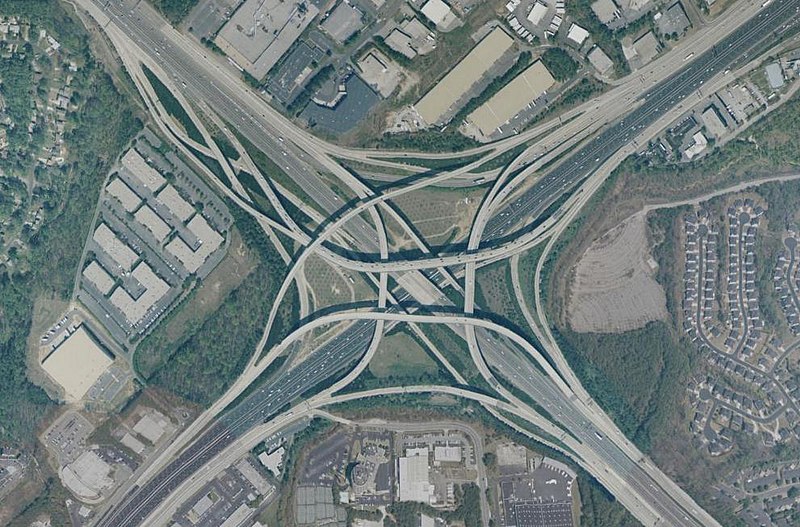
Social Trust, Spaghetti Junctions
Apropos of my class in risk communication, which is starting to wind down, I came across this article ( Atlanta Journal-Constitution article on Atlanta's Metro ) about Atlanta's problem getting their metro system fixed up.
 The gist of the story is that everyone in Atlanta knows the city's metro system needs to be updated in a major way, and astoundingly, everyone is willing to pay for it (more or less...about 2/3 said they would put money down). So far so good, right? Even the suburbanites have started asking when they're going to get rail, which goes to show how awful the commute has gotten.
But when the referendum to put $7.2 billion into roads and metro was up for voting this summer, it was turned down.
How?
Because the people of Atlanta, according to the poll described in the AJC story, don't trust their public officials not to screw it up.
The determinants of trust, for corporations and government agencies, are pretty basic.
Hopefully the poll will help them figure out what they have to do to prove they can responsibly handle billions of dollars. It might take a while. Especially with all the traffic.
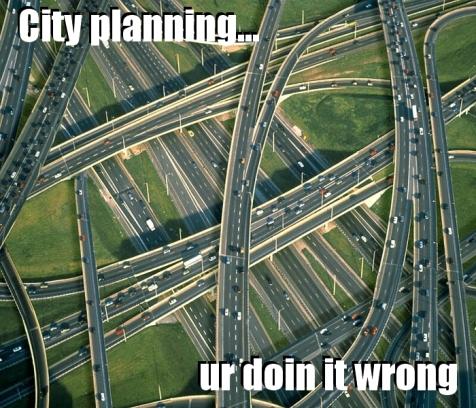
I like Atlanta, but I have to agree, its transportation system is a mess.

But when the referendum to put $7.2 billion into roads and metro was up for voting this summer, it was turned down.
How?
Because the people of Atlanta, according to the poll described in the AJC story, don't trust their public officials not to screw it up.
The determinants of trust, for corporations and government agencies, are pretty basic.
- 1. Competence, expertise
- Yep, that one's been screwed up by highway construction that didn't finish on time, by decisions to put trains in politically convenient locations, and general inability to fix the existing transport problems.
- 2. Commitment to the public good
- Also damaged, mostly by political scandals and corruption cases
- 3. Concern, care
- Political shenanigans don't help with this one either. Transparency can go a long way here, and probably got damaged during previous roadwork projects where toll roads popped up without warning, that sort of thing.
Hopefully the poll will help them figure out what they have to do to prove they can responsibly handle billions of dollars. It might take a while. Especially with all the traffic.
I like Atlanta, but I have to agree, its transportation system is a mess.
Subscribe to:
Posts (Atom)